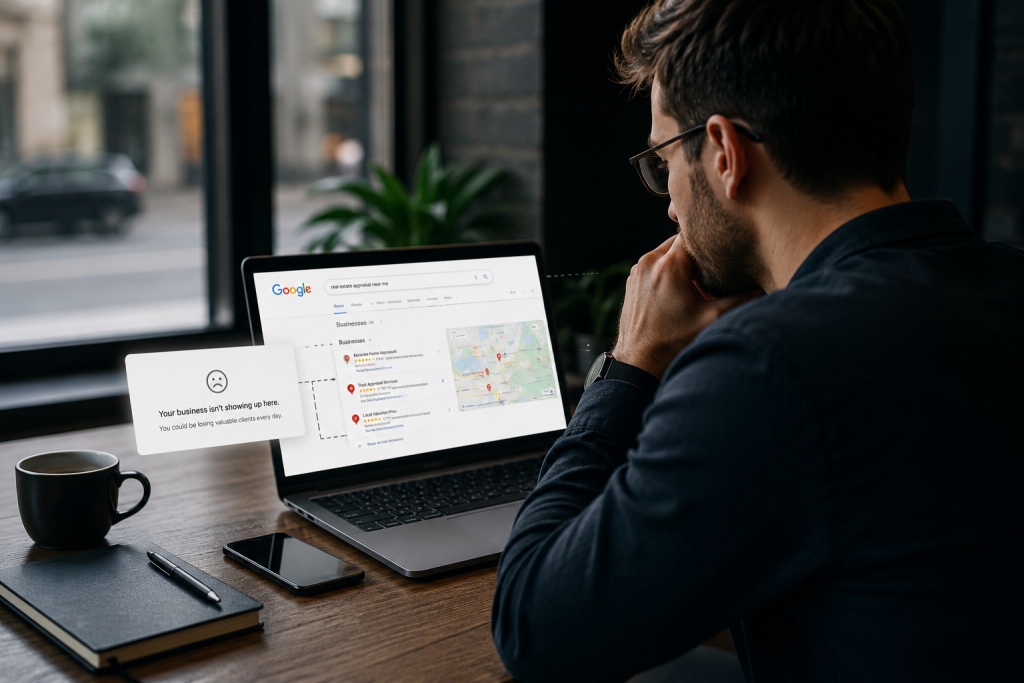

Every appraiser has heard a marketer promise “more leads.” It sounds specific. It isn’t. Until you know exactly which kind of lead is being talked about, the phrase is meaningless, because some appraisal work can never be influenced by marketing at all, and some can be influenced heavily. Mixing those two together is how firms end up disappointed with channels that were never going to work for the reason they were sold on.
What an appraisal lead actually is
A genuine appraisal lead is an inquiry from someone who has the actual ability to choose or request your firm for a specific assignment. That’s a narrower definition than most marketing pitches use, and it matters.
It is not a random AMC-assigned panel file. No website, no ad, no amount of visibility changes who an AMC rotates a file to, since that system exists specifically to remove appraiser selection from the lender’s hands.
It is a direct inquiry for non-lending work: pre-listing appraisals, private sale valuations, estate and probate appraisals, divorce and separation appraisals, tax appeal appraisals, litigation and expert witness assignments. Nobody assigns these. A client decides they need one and goes looking.
It is also a referral-partner relationship, a lawyer, mortgage broker, accountant, or real estate agent choosing to send you work because they know your name and trust your quality, whether that recognition started at a networking event or from finding your firm online.
And in some cases, it’s a borrower-requested appraiser on a mortgage file, where a lender permits a direct request and your visibility or reputation is what gets you named specifically.
If a marketer talks about “more leads” without specifying which of these they mean, ask them to be specific. It’s a fair question, and the answer tells you a lot.
Where these leads actually come from online
Organic search
Someone searches “[city] property appraisal” or “estate appraisal near me” and finds your website in the regular results. This is the highest-intent, most durable source available, but it compounds over months, not days. It only works if your website and content are actually built around what these specific searchers are asking, not a single general services page trying to cover everything at once. This is the core function of SEO built specifically for appraisal firms, structuring a site so it matches the exact assignment types and cities people are searching for.
The local map pack
A large share of “near me” searches get answered by the three-pack of local listings before anyone scrolls down to a website link at all. A fully built-out, review-supported Google Business Profile for appraisers is often the first thing a searching client sees, sometimes ahead of the website entirely. A thin or neglected profile gets skipped in favor of whichever competitor filled theirs out properly.
Google Ads
This is a demand-capture channel. It puts your firm in front of people who are actively typing a search for the exact service right now, which makes it the fastest way to get in front of high-intent searchers while the organic side is still building. It costs per click regardless of whether that click was ever going to convert, so the offer and the landing page carry a lot of weight. A well-targeted Google Ads campaign for appraisers can produce inquiries almost immediately, but only for the categories of work people actually search for directly.
Meta Ads
This is a demand-generation channel, not a demand-capture one, and treating it like Google Ads is where firms get disappointed. Almost nobody opens Instagram already thinking “I need an appraiser.” What Meta is actually useful for here is different: staying visible and recognizable to referral partners who might send direct work later, retargeting people who already visited your website but didn’t convert the first time, and building the kind of name recognition that makes your firm the obvious choice when a direct-request or referral situation comes up. It’s a trust-and-recognition layer, not a same-day inquiry tool, and any pitch that promises otherwise is overselling it.
Content and directories
Blog content captures the long-tail version of these same searches, the specific assignment types and specific circumstances like divorce or estate, and feeds back into organic search over time. Industry directories, like the Appraisal Institute’s own “find an appraiser” tool, are another place direct-search clients look, and they’re worth keeping current for the same reason.
Why these channels work together, not alone
SEO and content build the compounding, long-term pipeline, but they take time to show results. Google Ads fills that gap by capturing high-intent searchers immediately while the organic side is still growing. Meta doesn’t generate direct inquiries the way Google does, but it keeps your firm visible to the referral partners and past website visitors who are the actual source of a lot of non-panel work, the people who wouldn’t have converted on a first ad click but will remember your name when the estate file or divorce case lands on their desk.
A firm running only one of these in isolation is leaving the other two doing nothing. The map pack profile brings in searchers with no content behind it to convert them. SEO builds authority with no ads to capture the searchers it hasn’t ranked for yet. Ads run with no retargeting layer to bring back the people who almost converted. Treating appraisal lead generation as one connected system, rather than a single tactic picked in isolation, is what actually closes these gaps.
A quick self-check
Before deciding where to spend time or budget, it’s worth answering three questions honestly. Do you show up in the map pack when someone searches your city plus your specialty. Does your website have anything ranking for non-lending assignment terms like estate, divorce, or tax appeal appraisals, or does it only talk about residential and commercial in general terms. Is anyone retargeting the people who already visited your site once and left.
If you’re not sure which of these gaps is costing you the most work, that’s worth a real conversation rather than a guess. Book a Strategy Call and we’ll go through where your firm actually stands.